
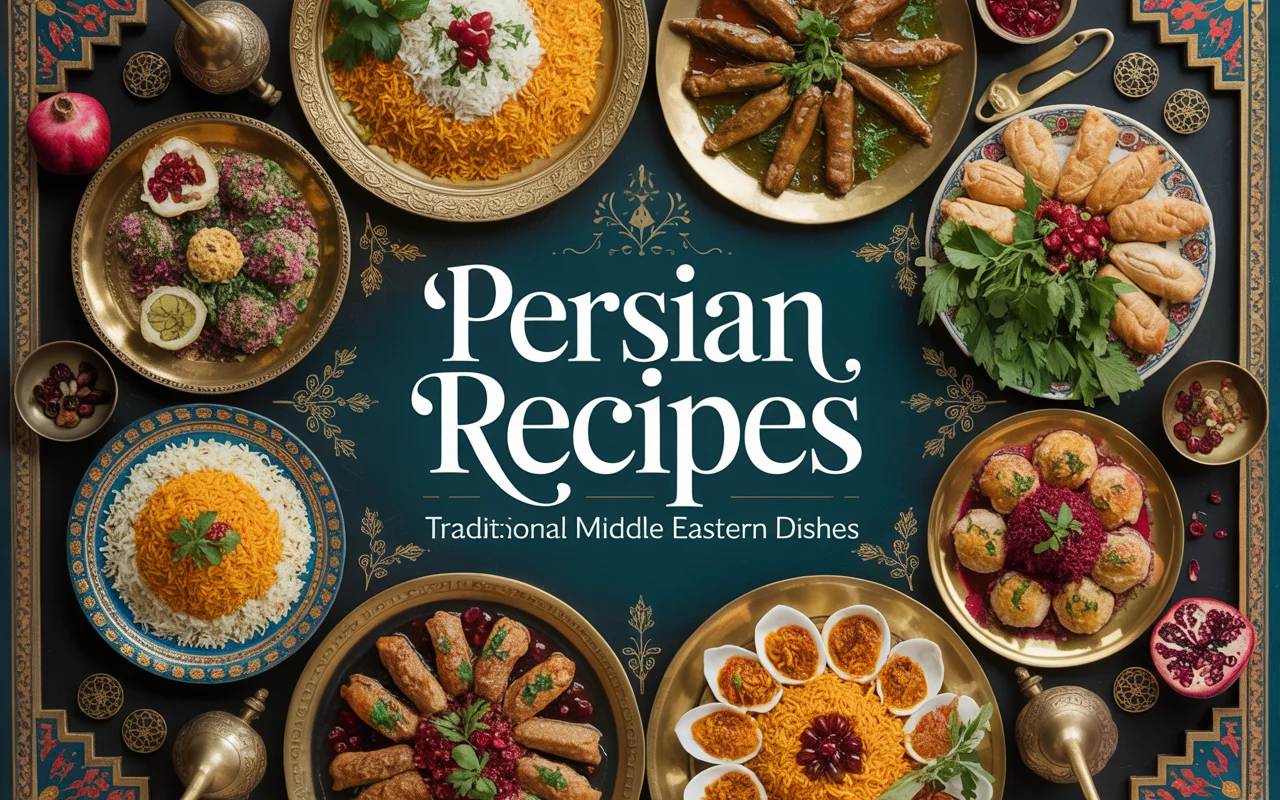
Gluten-free Persian recipes bring the magic of ancient Persia to your modern kitchen without compromising on flavor or tradition.
Iranian cuisine has mastered the art of naturally gluten-free cooking for centuries — think fragrant rice dishes (yes, rice is completely gluten-free!), herb-packed stews, and succulent kebabs that never needed wheat to shine.
Whether you’re hosting Nowruz celebrations or simply craving that intoxicating combo of saffron, rosewater, and cardamom, these traditional Persian dishes prove that authentic Middle Eastern food can be both celiac-friendly and completely swoon-worthy.
Fun fact: Iran produces some of the world’s finest saffron, and Persians have been using it in their cooking for over 3,000 years — talk about staying power! 🌸
The Soul of Persian Cooking: Where Flavor Meets Tradition
Persian cooking isn’t just about recipes — it’s poetry on a plate. For thousands of years, Iranian cuisine has celebrated fresh herbs, jewel-toned spices, and the balance of sweet and savory that makes every bite feel like a celebration.
From the silk road traders who brought exotic flavors to Persian kitchens, to modern families gathering around steaming pots of ghormeh sabzi, food is the thread connecting generations.
The beauty? Most authentic Persian food is naturally gluten-free, built around rice, meat, vegetables, and legumes. As they say in Farsi, “nush-e jaan” — may it nourish your soul.
Traditional Persian Dishes: Naturally Gluten-Free Recipes
Here’s where things get deliciously aromatic — these authentic Persian food ideas will transport your taste buds straight to Tehran’s bustling bazaars, no passport required.
Tahdig (Crispy Persian Rice)
The crown jewel of Iranian cuisine, tahdig is that golden, crispy rice crust that everyone fights over at the dinner table. It’s crunchy, buttery, and honestly, the reason many Persians claim they “don’t like soft rice.”
This gluten-free Persian recipe delivers that satisfying crackle with every forkful, topped with saffron-infused basmati that smells like a Middle Eastern dream.
Key Ingredients:
- Basmati rice
- Saffron threads
- Butter or olive oil
- Plain yogurt (optional, for extra crispiness)
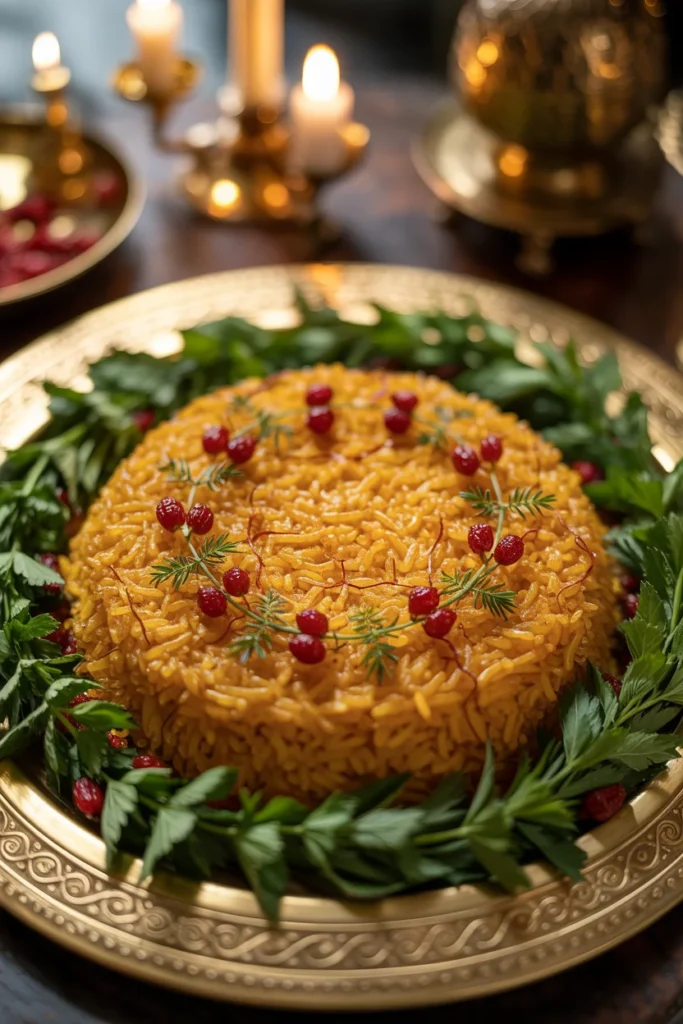
Quick Cooking Tip: Rinse your rice until the water runs clear, then parboil it for 6-8 minutes. Drain, mix a portion with yogurt and saffron, spread it in your oiled pot, then layer the remaining rice on top.
Cook on medium-high for 3 minutes, then low heat for 45 minutes. The key? Don’t peek! Let the steam work its magic.
Pro tip: Add thinly sliced potatoes at the bottom for an extra-crispy tahdig that’ll make you look like a Persian grandma. And if you love that satisfying crunch, check out our gluten-free crispy chicken recipe — it pairs beautifully with Persian rice dishes!
Ghormeh Sabzi (Persian Herb Stew)
This is Iran’s national dish, and for good reason — it’s basically a hug in a bowl. Packed with fresh herbs (parsley, cilantro, fenugreek), kidney beans, and tender chunks of lamb or beef, ghormeh sabzi is earthy, tangy, and ridiculously comforting. The dried limes add a citrusy punch that makes this traditional Middle Eastern dish unforgettable.
Key Ingredients:
- Fresh parsley, cilantro, and fenugreek
- Stewing beef or lamb
- Red kidney beans
- Dried Persian limes (limoo omani)
- Turmeric
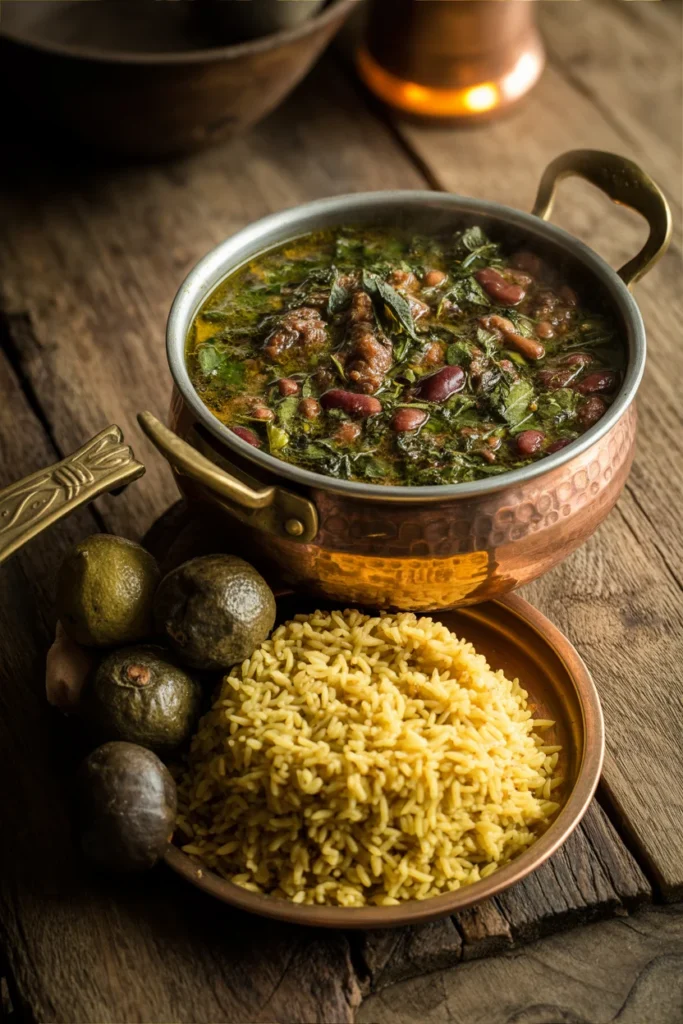
Quick Cooking Tip: Sauté your chopped herbs in oil until darkened and fragrant (this takes about 15-20 minutes but is SO worth it). Brown your meat separately, then combine everything with beans, dried limes, and turmeric. Simmer for 2-3 hours until the meat falls apart.
The longer it cooks, the better it tastes. Persian grandmas swear by making this a day ahead — the flavors get friendlier overnight. Serve over fluffy basmati rice and try not to lick the bowl.
Fesenjan (Pomegranate Walnut Stew)
Sweet, tangy, and nutty — fesenjan is the Persian dish that makes people say “wait, WHAT is in this?” Ground walnuts and pomegranate molasses create a thick, luxurious sauce that coats chicken or duck in the most elegant way.
This gluten-free Middle Eastern recipe is fancy enough for Nowruz but cozy enough for a Tuesday night.
Key Ingredients:
- Ground walnuts
- Pomegranate molasses
- Chicken thighs or duck
- Onions
- Cinnamon and cardamom
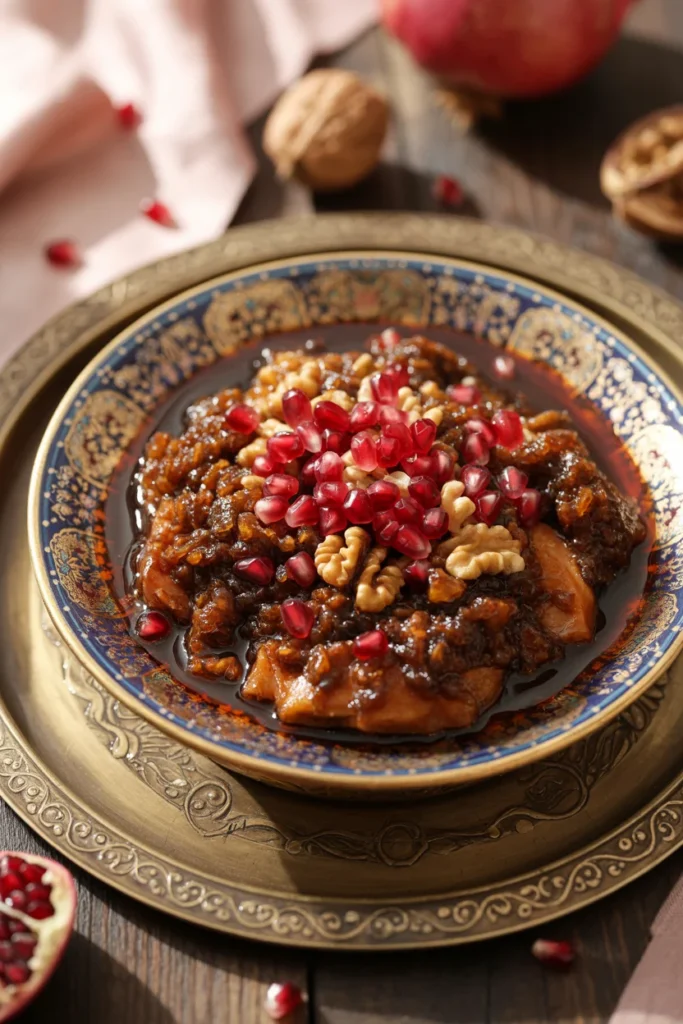
Quick Cooking Tip: Toast your ground walnuts in a dry pan until fragrant, then cook them with sautéed onions, pomegranate molasses, and warm spices.
Add browned chicken pieces and simmer gently for 60-90 minutes until the sauce thickens and turns a gorgeous burgundy color.
Balance the sweet-tart flavor to your liking — more molasses for tang, a pinch of sugar if it’s too sour. Serve with rice and pomegranate arils scattered on top for that Instagram-worthy finish.
Kabab Koobideh (Persian Ground Meat Kebab)
These juicy, charred kebabs are what Persian BBQ dreams are made of. Ground beef or lamb mixed with grated onions and simple spices, then grilled over hot coals until they develop that irresistible smoky crust.
Kabab koobideh is a staple of authentic Persian food and naturally gluten-free — just meat, onion, and fire magic.
Key Ingredients:
- Ground beef or lamb (or a mix)
- Grated onion
- Turmeric and sumac
- Salt and black pepper
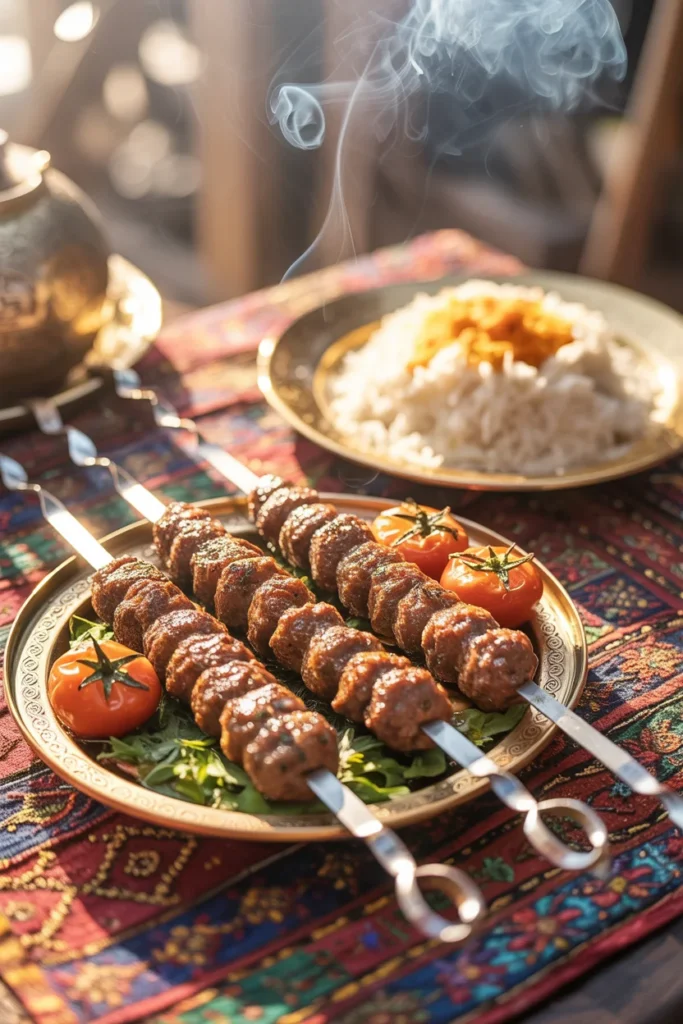
Quick Cooking Tip: Mix your meat with finely grated onion (squeeze out the excess juice), salt, pepper, and turmeric. Knead it like your life depends on it — 5-10 minutes of mixing makes the meat sticky enough to cling to skewers.
Form long sausage shapes around flat skewers and grill over high heat, turning frequently. The trick? Keep a piece of fatty lamb tail on the grill nearby — the dripping fat keeps everything moist. Serve with grilled tomatoes, fresh basil, and plenty of tahdig.
Kuku Sabzi (Persian Herb Frittata)
Think of kuku sabzi as the Middle Eastern cousin of a frittata, but greener and more aromatic. Loaded with fresh herbs, a bit of walnut or barberry, and eggs that bind it all together, this gluten-free Persian recipe is perfect for Nowruz breakfast spreads or light dinners. It’s bright, fluffy, and tastes like spring in every bite.
Key Ingredients:
- Fresh parsley, cilantro, dill, and chives
- Eggs
- Walnuts or barberries
- Turmeric
- Baking powder (optional, for extra fluff)
Quick Cooking Tip: Finely chop your herbs (or pulse in a food processor), then mix with beaten eggs, turmeric, and a pinch of baking powder.
Pour into a hot, oiled pan and cook on the stovetop until the bottom sets, then either flip carefully or finish under the broiler until golden and puffy. Cut into wedges and serve warm or at room temperature with yogurt and flatbread on the side.
Pro tip: Make mini kukus in a muffin tin for the cutest brunch ever.
Zereshk Polo (Barberry Rice with Saffron Chicken)
If Persian rice dishes had a beauty pageant, zereshk polo would win the crown. Fluffy saffron rice studded with tart, ruby-red barberries and topped with tender, turmeric-braised chicken — it’s as gorgeous as it is delicious. This traditional Persian dish is a Nowruz favorite and completely gluten-free.
Key Ingredients:
- Basmati rice
- Dried barberries (zereshk)
- Chicken pieces
- Saffron
- Butter and sugar
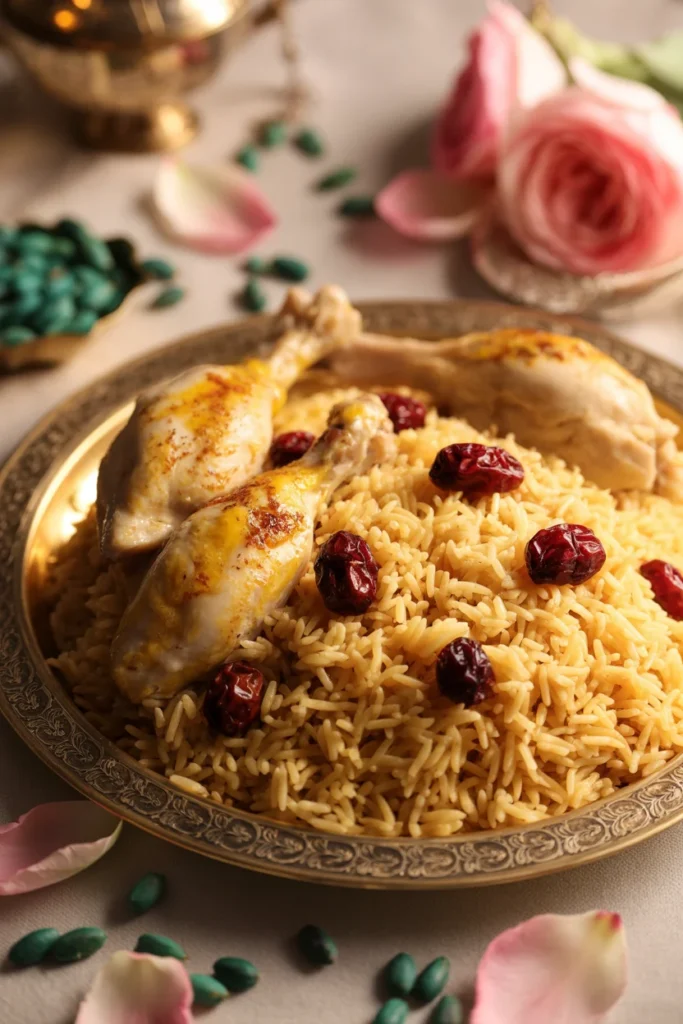
Quick Cooking Tip: Prepare your rice with the tahdig method (see above). Quickly sauté barberries in butter with a pinch of sugar until they plump up — don’t overcook or they’ll turn bitter. Separately, braise chicken with onions, turmeric, and saffron until fall-apart tender.
Layer everything together: crispy tahdig on the bottom, fluffy rice, jeweled barberries on top, chicken pieces crowning it all. The contrast of sweet-tart berries with savory chicken? Chef’s kiss.
Ash-e Reshteh (Persian Noodle Soup)
Okay, hear me out — traditional ash-e reshteh uses wheat noodles, BUT you can easily swap in rice noodles or gluten-free alternatives for this hearty, herb-loaded Persian soup.
It’s thick, tangy from kashk (whey), and packed with beans, lentils, and greens. Persians make this for Nowruz to symbolize good fortune and untangling life’s knots.
Key Ingredients:
- Gluten-free rice noodles
- Chickpeas, lentils, and kidney beans
- Fresh herbs (parsley, cilantro, spinach)
- Kashk (fermented whey) or Greek yogurt
- Fried onions and mint oil
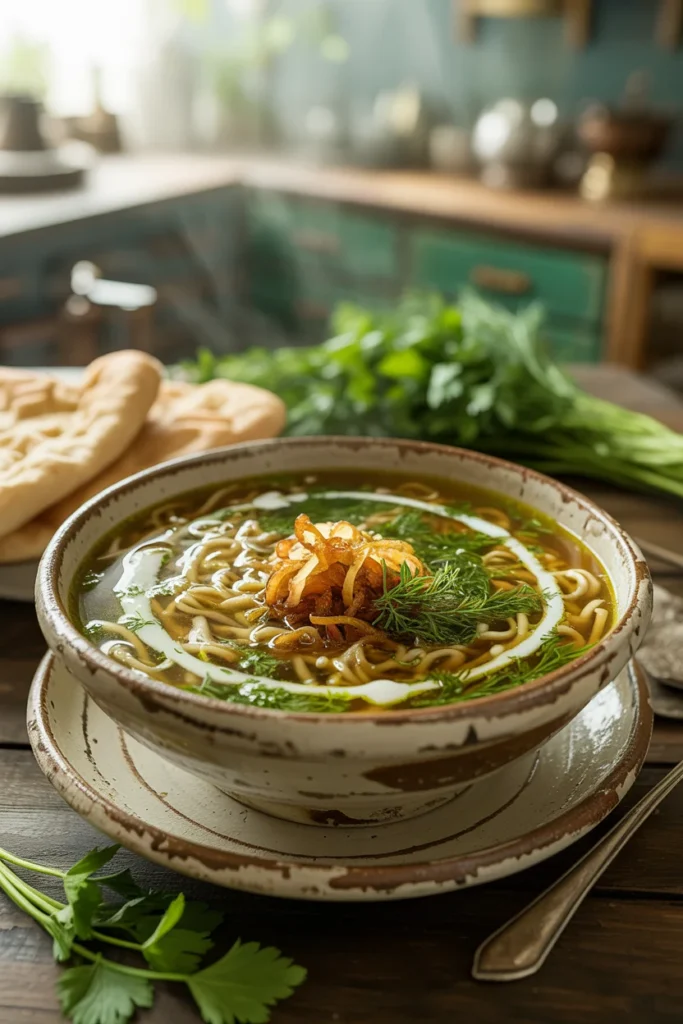
Quick Cooking Tip: Sauté your herbs until wilted, then add cooked beans, lentils, and broth. Simmer until everything melds together beautifully.
Add your gluten-free noodles in the last 10 minutes. Ladle into bowls and top with swirls of kashk, crispy fried onions, and sizzling mint oil.
The toppings are non-negotiable — they turn this from “nice soup” to “I need this in my life weekly.” Balance the tanginess to your taste; some like it zingy, others prefer it mild.
Conclusion
These gluten-free Persian recipes prove that traditional Middle Eastern dishes can be both authentic and accessible, no matter your dietary needs.
From the crispy crackle of tahdig to the sweet-tart magic of fesenjan, Iranian cuisine offers flavors that have stood the test of time — and they just happen to be naturally celiac-friendly.
Whip up your favorite, snap a picture for Pinterest, and let those Persian spices work their ancient magic in your kitchen.
FAQs
What makes Persian recipes naturally gluten-free?
Most authentic Persian food centers around rice, meat, vegetables, and legumes rather than wheat, making many traditional Middle Eastern dishes naturally gluten-free.
Can I substitute ingredients in Persian cooking?
Absolutely! Swap lamb for chicken, use vegetable broth instead of meat, or replace traditional garnishes with what you have — Persian cooking is forgiving and adaptable.
What’s the most important spice in Iranian cuisine?
Saffron is considered the king of Persian spices, followed closely by turmeric, sumac, and dried lime — each brings unique flavor to traditional Persian dishes.
How do I make perfect Persian rice?
The secret is soaking, rinsing until water runs clear, parboiling, and then steaming with a towel under the lid to create fluffy rice with crispy tahdig.
Where can I find Persian ingredients?
Middle Eastern grocery stores carry most ingredients, or shop online for items like dried limes, barberries, and Persian saffron to make authentic gluten-free Persian recipes.

I’m Dr. Shivani, a Kolkata-based nutritionist since 2015. After 10 years of igniting a love for healthy eating in young minds as a High School nutritionist teacher, I now help individuals unlock their full potential through personalized diet plans. My passion for writing and sharing nutrition knowledge (through blogs and observations) keeps my practice fresh and fuels my love for the field!