
Are you wondering if quinoa is gluten-free? It’s a common question, especially for those on a gluten-free diet. This guide will cover quinoa’s gluten-free status, its health benefits, and how to use it in your meals.
Key Takeaways
- Quinoa is naturally gluten-free, but can be cross-contaminated with gluten-containing grains during processing.
- Quinoa is a nutritional powerhouse, rich in fiber, protein, and essential vitamins and minerals.
- To ensure quinoa is truly gluten-free, look for products labeled or certified as such.
- Quinoa can be a versatile and healthy substitute for those following a gluten-free diet.
- Proper labeling and testing for gluten levels is crucial for individuals with celiac disease or severe gluten sensitivities.
What is Quinoa?
An Ancient Grain with a Rich History
Quinoa is often called a “superfood.” It’s a grain-like crop from the Andes in South America. People have eaten it for over 5,000-7,000 years. It’s actually a seed from the spinach family, so it’s a pseudocereal.
Quinoa was very important to the Inca civilization. They called it the “mother grain.” It was a key food in South American cuisine for centuries. It gave people protein, fiber, and important vitamins and minerals.
Now, quinoa is grown and eaten all over the world. It’s still a big part of South American food. And it’s also found in health food stores and kitchens everywhere.
Quinoa is special because it’s a pseudocereal. This means it’s not a true grain but has similar uses in cooking. It has a unique nutritional profile and can be used in many dishes.
In recent years, quinoa has become a superfood. People like it because it’s full of nutrients and gluten-free. Its history, nutrition, and many uses have made it a favorite in today’s diets.
Is Quinoa Gluten Free?
Yes, quinoa is naturally gluten-free. It’s an ancient grain that’s not from wheat, barley, or rye. These are the main sources of gluten. So, quinoa is a good choice for people with celiac disease or non-celiac gluten sensitivity.
But, quinoa can still get gluten from cross-contamination during growing, harvesting, or processing. To be sure it’s gluten-free, buy products labeled or certified as such. This means the maker took steps to avoid gluten during production.
Studies show quinoa is safe for people with celiac disease. In one study, 19 celiac patients ate 50 grams of quinoa every day for six weeks. Their blood tests and gut health stayed normal. This proves quinoa is a good part of a gluten-free diet.
| Nutrient | Quinoa | Other Gluten-Free Grains |
|---|---|---|
| Protein | 14.1% | Varies (Amaranth: 9-17%, Buckwheat: 12-13%, Millet: 6-9%, Teff: 9-11%) |
| Fat | 6% | Varies (Amaranth: 7-8%, Buckwheat: 3-4%, Millet: 4-5%, Teff: 2-3%) |
| Carbohydrates | 64.2% | Varies (Amaranth: 65-71%, Buckwheat: 71-75%, Millet: 72-75%, Teff: 73-74%) |
| Dietary Fiber | 7% | Varies (Amaranth: 6-7%, Buckwheat: 10-12%, Millet: 8-9%, Teff: 8-9%) |
Quinoa is also a superfood that’s gluten-free. It’s full of protein, fiber, vitamins, and minerals. Its many health benefits make it a top pick for those on a gluten-free diet or anyone wanting a nutritious meal addition.
Nutritional Benefits of Quinoa
A Protein-Packed Superfood
Quinoa is a super grain that’s packed with nutrients. It has all nine essential amino acids, making it a great plant-based protein source. It’s also low on the glycemic index, which helps control blood sugar levels.
Quinoa is full of fiber, vitamins, and minerals like magnesium and iron. These nutrients make it a superfood. They help with weight loss and managing weight.
| Nutrient | Amount in 1 cup (185g) of Cooked Quinoa |
|---|---|
| Calories | 222 |
| Protein | 8g |
| Fat | 3.55g |
| Carbohydrates | 39g |
| Fiber | 5g (18% of the Daily Value) |
| Folate | 19% of the Daily Value |
| Vitamin B6 | 13% of the Daily Value |
| Copper | 39% of the Daily Value |
| Iron | 15% of the Daily Value |
| Zinc | 18% of the Daily Value |
| Manganese | 51% of the Daily Value |
| Magnesium | 28% of the Daily Value |
| Potassium | 7% of the Daily Value |
| Phosphorus | 22% of the Daily Value |
Quinoa is full of nutrients like folate and magnesium. It also has antioxidants and anti-inflammatory compounds. Its high fiber and low glycemic index make it a superfood. It supports health, weight management, and disease prevention.
Cooking with Quinoa
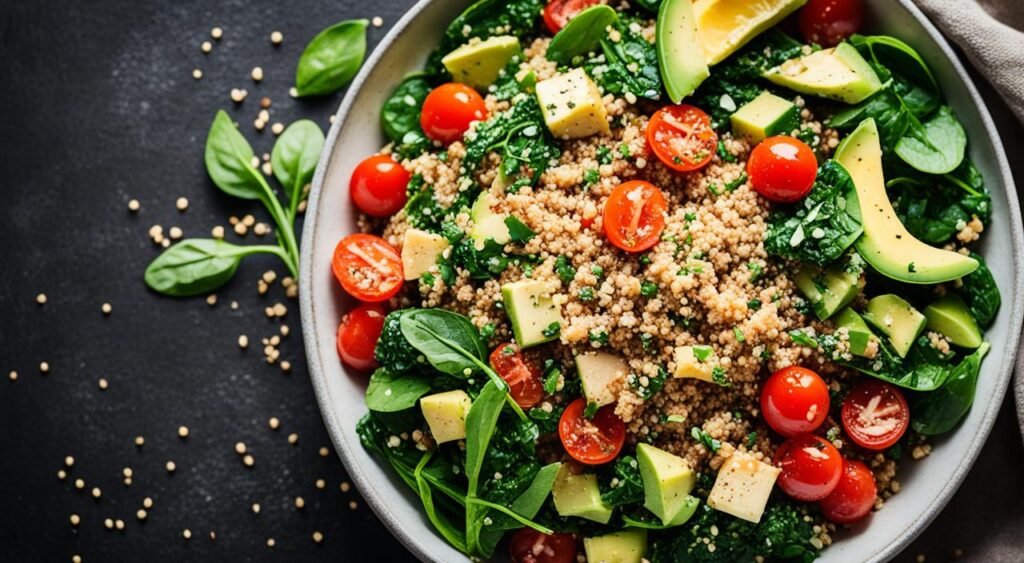
Quinoa is a great gluten-free ingredient for many dishes. You can use it in savory stir-fries, grain salads, or even sweet quinoa chocolate cake. It’s both nutritious and tasty in any recipe.
First, rinse the quinoa to get rid of its bitter coating. Put the quinoa in a fine-mesh strainer and rinse under running water until the water is clear. Then, cook it with a 1:1.75 quinoa-to-water ratio. Simmer for about 15 minutes until it’s light and fluffy.
| Cooking Method | Quinoa-to-Water Ratio | Cooking Time |
|---|---|---|
| Stovetop | 1:2 | 15 minutes |
| Instant Pot | 1:1.5 | Varies by model |
| Slow Cooker | 1:2 | 3-4 hours on low |
Quinoa has a mild taste, making it a good gluten-free choice for many dishes. It can be used in salads, stir-fries, casseroles, and even desserts. Quinoa is high in protein and fiber, making it a nutritious choice for gluten-free meals and baking.
If you’re new to cooking with quinoa or you’re an expert, there are many ways to use this versatile ingredient in your gluten-free cooking. From breakfast to dessert, quinoa recipes are a tasty and healthy way to enjoy this ancient grain.
Gluten-Free Alternatives to Quinoa
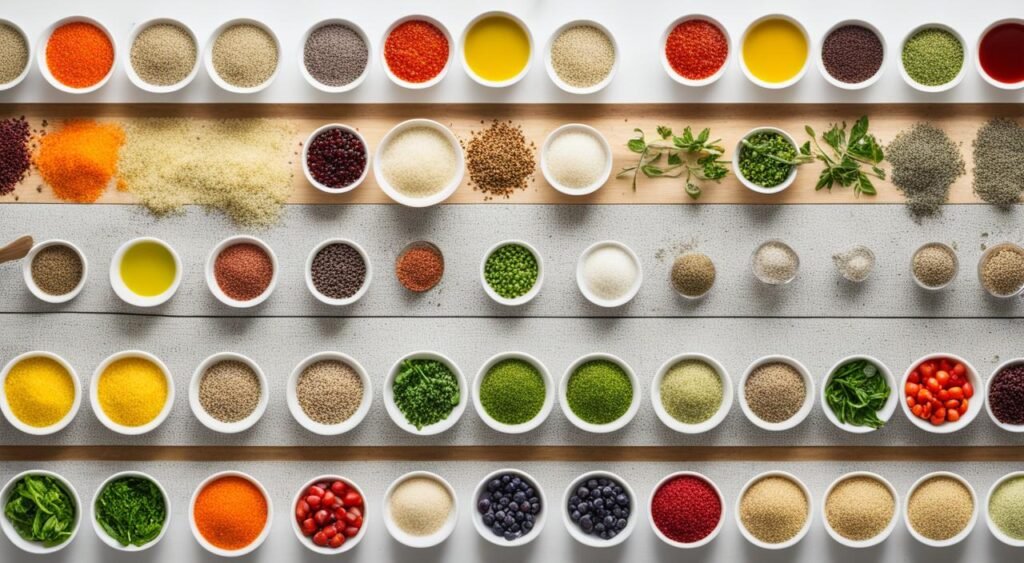
Quinoa is a great gluten-free grain, but it’s not the only choice for those on a celiac diet or non-celiac gluten sensitivity. Many other ancient grains and pseudocereals are tasty and versatile gluten-free grains. They can be added to your meals.
Grains like amaranth, buckwheat, millet, sorghum, teff, oats, rice, and corn are all gluten-free. They offer different flavors and textures. They also have great nutritional values.
- Sorghum has 13 grams of fiber, 20 grams of protein, and 19% of the daily iron value per cup (192 grams).
- Oats give you 8 grams of fiber, 11 grams of protein, and are full of magnesium, zinc, selenium, and thiamine (vitamin B1) per cup (81 grams) of dry oats.
- Buckwheat has 5 grams of fiber, 6 grams of protein, and is packed with magnesium, copper, and manganese per cup (168 grams) of cooked buckwheat groats.
- Amaranth has 5 grams of fiber, 9 grams of protein, meets 29% of daily iron needs, and is full of magnesium, phosphorus, and manganese in one cup (246 grams) of cooked amaranth.
- Teff offers 10 grams of protein, 7 grams of fiber, and lots of B vitamins, especially thiamine, per one cup (252 grams) of cooked teff.
Using a mix of these gluten-free grains can make your celiac diet or non-celiac gluten sensitivity more interesting. Try the unique tastes and textures of these ancient grains. Find new ways to enjoy them in your meals.
Delicious Quinoa Recipes
Quinoa is great for many dishes, both savory and sweet. It’s perfect for a gluten-free meal or a sweet dessert. Here are some tasty quinoa recipe ideas to try.
Savory Quinoa Creations
Try our gluten-free quinoa burgers for a filling lunch or dinner. They’re made with quinoa, black beans, and spices. These patties are full of protein and fiber. Serve them on greens or in a whole-grain bun.
Our quinoa salad is another great option. It has fresh veggies, herbs, and a zesty dressing. It’s perfect for meal prep or as a side to grilled meats. The quinoa goes well with crunchy veggies and tangy flavors.
Sweet Quinoa Delights
If you like sweets, our quinoa chocolate cake is for you. Quinoa’s mild taste works well with rich cocoa. It makes a moist and decadent dessert. Add a creamy frosting for an extra treat.
For a healthy breakfast, try our gluten-free quinoa porridge. Cook quinoa with your favorite milk. Then, top it with fresh fruit, nuts, and honey for a nutritious start.
Quinoa is great for both savory and sweet dishes. Try different flavors and textures to find your new favorite quinoa recipe!
Conclusion
Quinoa is a special ancient grain that is good for our health. It’s great for those who need to avoid gluten. Make sure to pick quinoa that says it’s gluten-free to stay safe.
Adding quinoa to our meals, in both savory and sweet dishes, is a smart choice. It’s packed with protein and is very versatile. This makes it a top pick for a gluten-free diet.
Quinoa has a long history and is full of nutrients. It’s also great for cooking in many ways. Its benefits include fighting inflammation and helping with heart health and blood sugar levels.
In short, quinoa is a great gluten-free grain for any meal. It’s both tasty and good for you. If you love quinoa or are new to it, try different ways to use it. It can really improve your health and happiness.
FAQs
Can I eat quinoa if I have celiac disease?
Yes, you can eat quinoa if you have celiac disease, but only if it’s labeled “certified gluten-free.” Pure quinoa doesn’t contain gluten, but it often gets mixed with wheat during processing. A study tested 19 people with celiac disease who ate 50 grams of certified gluten-free quinoa daily for six weeks. Their blood tests and gut health stayed normal the whole time. Just make sure the package has a gluten-free certification label. Regular quinoa without this label might have picked up gluten from shared equipment or storage.
Why does my quinoa taste bitter?
That bitter taste comes from saponin—a natural coating on quinoa seeds that keeps bugs away while the plant grows. Most store-bought quinoa has been pre-rinsed, but some saponin always sticks around. The fix is simple: put your quinoa in a fine-mesh strainer and rinse it under cold water for 3-4 minutes. Swish it around with your hand. When the water runs clear instead of cloudy or foamy, you’re done. This small step makes a big difference in taste.
How long does quinoa last after I cook it?
Cooked quinoa lasts 5 to 7 days in the fridge if you store it in an airtight container. Don’t leave cooked quinoa sitting on your counter for more than 2 hours—bacteria grow fast between 40°F and 140°F. If you want it to last longer, freeze it. Cooked quinoa stays good in the freezer for 8 to 12 months. Put it in freezer bags, squeeze out the air, and write the date on it. When you’re ready to eat it, microwave it straight from frozen with a splash of water.
Is quinoa safe to buy from grocery store bulk bins?
No, skip the bulk bins if you need gluten-free quinoa. People use the same scoops for everything—wheat berries, regular oats, and quinoa all get touched by the same scoop. That means gluten from other bins gets into the quinoa. Studies show that 32% of naturally gluten-free grains that aren’t labeled can have enough gluten to hurt people with celiac disease. Always buy pre-packaged quinoa with a certified gluten-free label. It costs a bit more, but your health is worth it.
What’s the difference between white, red, and black quinoa?
All three types are gluten-free, but they cook and taste differently. White quinoa is the mildest and cooks fastest (12-15 minutes)—kids usually like this one best. Red quinoa stays firm after cooking, making it perfect for cold salads where you don’t want mushy grains. Black quinoa has the strongest, earthiest flavor and lasts longest in storage because it has less fat. Can’t decide? Buy tri-color quinoa that mixes all three types in one bag. You get different textures and flavors in every bite.

I’m Dr. Shivani, a Kolkata-based nutritionist since 2015. After 10 years of igniting a love for healthy eating in young minds as a High School nutritionist teacher, I now help individuals unlock their full potential through personalized diet plans. My passion for writing and sharing nutrition knowledge (through blogs and observations) keeps my practice fresh and fuels my love for the field!